HOW TO EAT A BUG: Musings From Three Insectivorous Plants of Eight Dollar Mountain
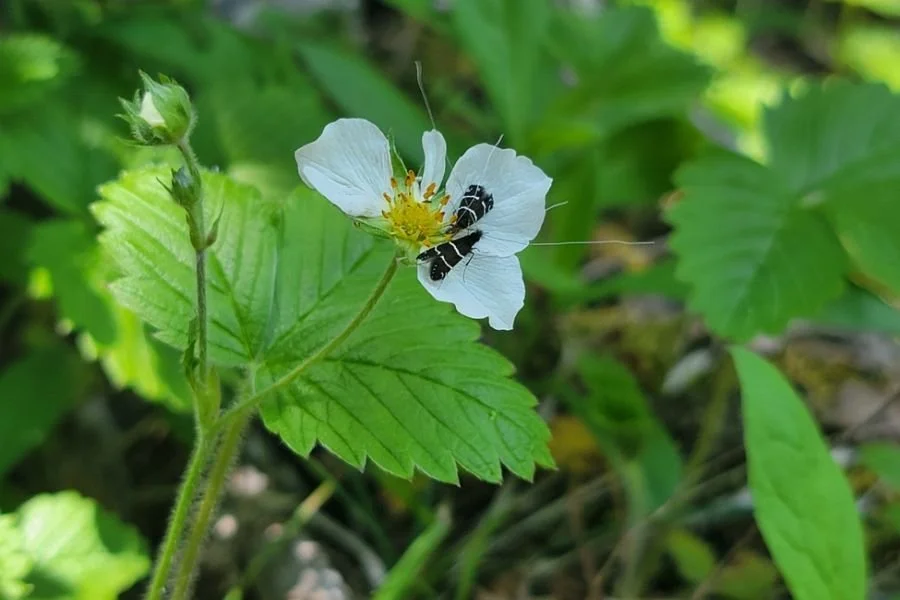
Sticky tofieldia or western false-asphodel, Triantha occidentalis
You are not in this for recognition or stardom, you just need to supplement your diet of eating sunlight and gathering nutrients because the soils on Eight Dollar Mountain are a bit like human junk food, low in plant nutrients and high in toxic metals. Everyone needs to eat, yet you are sessile and embedded in soggy wetland soils. For eons, you have been digesting bugs, but only in 2021, did human scientists discover your clever ways. Sticky flower stems do the trick, very sticky bug-trapping stems. Tiny hairs on your stem release phosphatase, an enzyme, allowing you to digest very small protein and phosphorus-rich snacks like fruit flies while avoiding eating your larger pollinator buddies who are stronger and can avoid getting stuck. This strategy works: over half of your nitrogen comes from consuming itty bitty bugs! You are the first plant known to capture your food via flowering stems, the rest of the world’s 1000 or so carnivorous plants capture prey with modified leaves. Do other sticky-stemmed plants also eat bugs? Stay tuned!
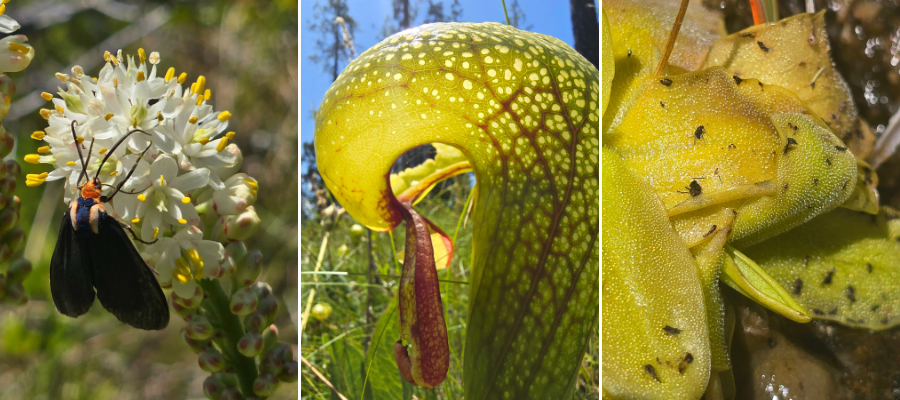
Cobra-lily, a pitcher plant, Darlingtonia californica
Speaking of modified leaves, your pitcher is a work of art: a slender green tube swelling into an otherworldly cobra-like head. Your pitcher is not for serving cold drinks, no, it is for catching prey. But first, you must smell good, luring a bug into your pitcher through a hole below your leafy fangs. Then you need to wear it out, as the bug tries to escape through transparent windows at the top. These windows never open, so it struggles and grows tired. You encourage it down, down your tube with downward-pointing hairs. Then you drown the insect, okay, but quickly. The water at the bottom, water levels which you can moderate up or down, hosts bacteria that reduce the water tension at the surface, so it is a speedy death. Inside the pool of water, you harbor friends, seven species of mites and midges who live nowhere else in the world; they eat most of the bugs and poop out digestible nutrients for you. The writer Maria Popova wrote: An organism is a cathedral of complexity, both sovereign and interdependent. Yes, you are!
Common Butterwort, Pinguicula vulgaris
Or are you a Ping, growing next to a small streamlet with buttery tongue-like leaves? Your stalked hair glands provide the stick, and flat glands supply the digestive enzymes. You are a butterwort, but by no means common outside of wetlands or serpentine fens. Aphids or other soft-shelled insects, beware, the more they struggle the more you produce mucky mucilage, and the leaves will eat you all up. However, like many animals, you are an omnivore, your leaves eat pollen and other plant materials, via a digestive enzyme called alpha-amylase. So far, you are the only known plant omnivore, eating bugs and plants, while also making food from sunlight. Bravo!