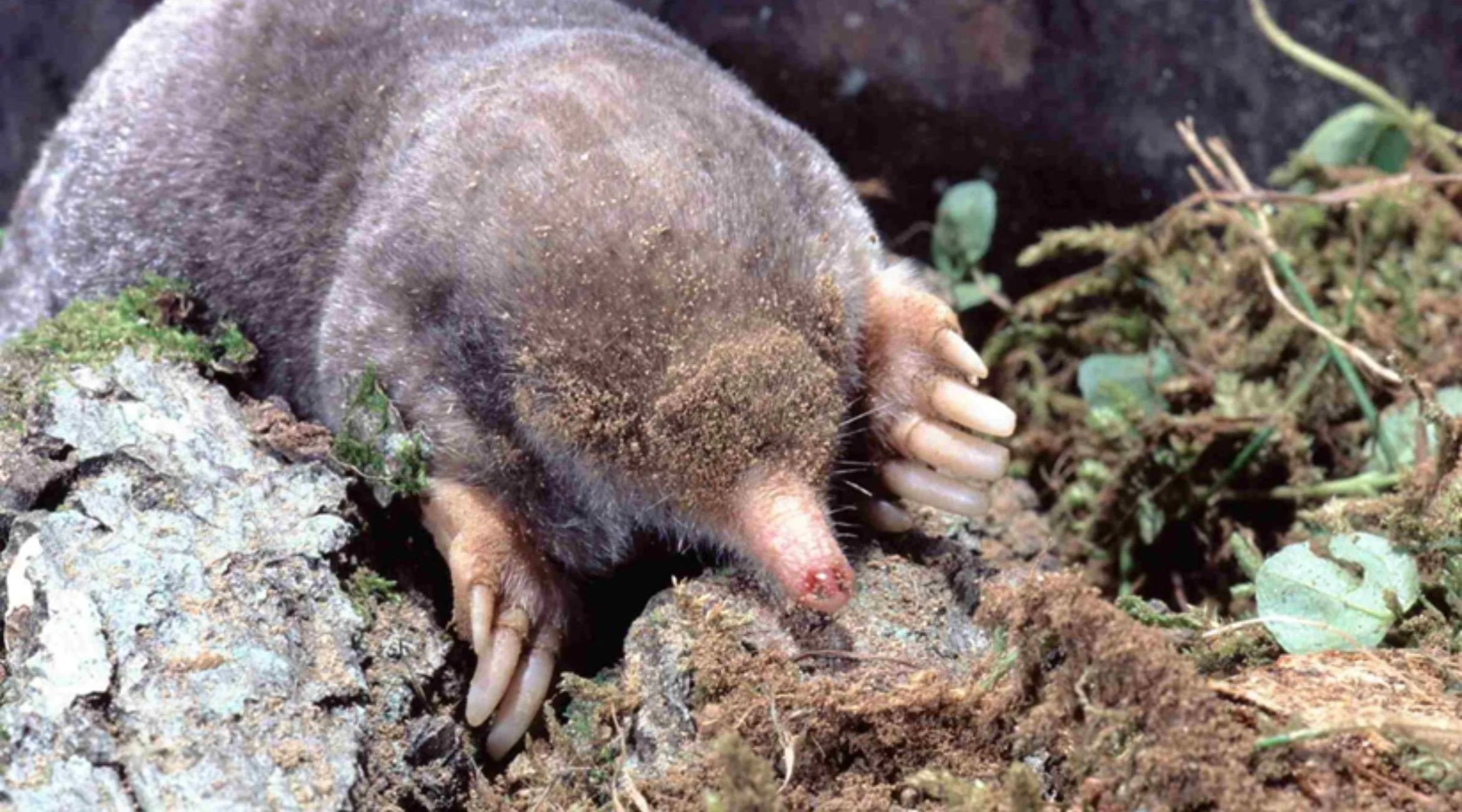
Moles are small and objectively cute mammals in the family Talpidae, a group best known for the raised tunnels and molehills they create in soil. These misunderstood velvet potatoes are often considered garden pests, although moles play an important ecological role in the environment and possess remarkable adaptations for life underground.
There are four common species of mole in Oregon, the Townsend's Mole (Scapanus townsendii), the largest mole in North America, the Pacific Mole (Scapanus orarius), the Broad-footed Mole (Scapanus latimanus), and the Shrew-mole (Neurotrichus gibbsii), which is the smallest species.
One of the mole’s most striking features is its forelimbs. These are broad, powerful, and rotated outward, acting like natural shovels. Large claws enable moles to dig extensive tunnel systems at impressive speeds—some species can excavate around 100 feet of tunnel in a single day. Their eyes are tiny and often covered by fur or skin, as vision is of limited use underground. Instead, moles rely heavily on touch and smell. Their snouts are extremely sensitive, and some species, such as the star-nosed mole (Condylura cristata), possess specialized sensory organs to detect prey.
Moles are insectivores, meaning their diet consists mainly of invertebrates. Earthworms are their primary food source, along with insect larvae, beetles, and other soil-dwelling organisms. Interestingly, moles may store earthworms in underground chambers, biting them to immobilize but not kill them, ensuring a fresh food supply.
Contrary to popular belief, moles do not eat plant roots. From an ecological perspective, the digging action has benefits: mole tunnels aerate the soil, improve water drainage, and help mix organic material into deeper layers of earth. Their activity also controls insect populations, many of which are agricultural pests. Always adorable and often misunderstood, moles are highly specialized animals that play a quiet but significant role beneath our feet.