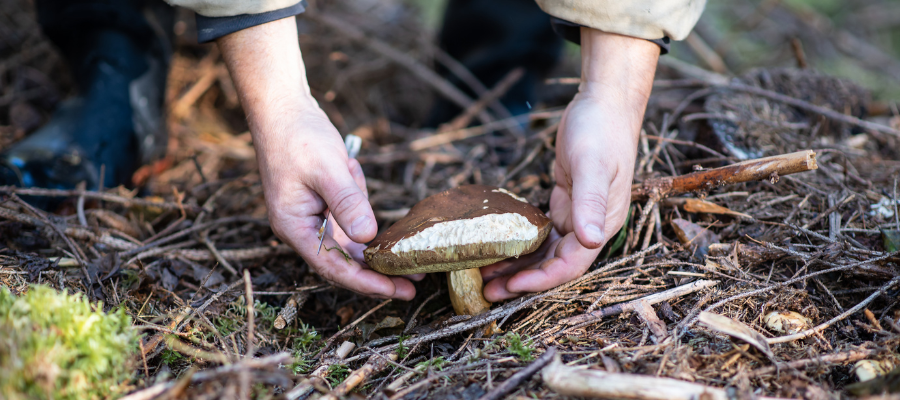
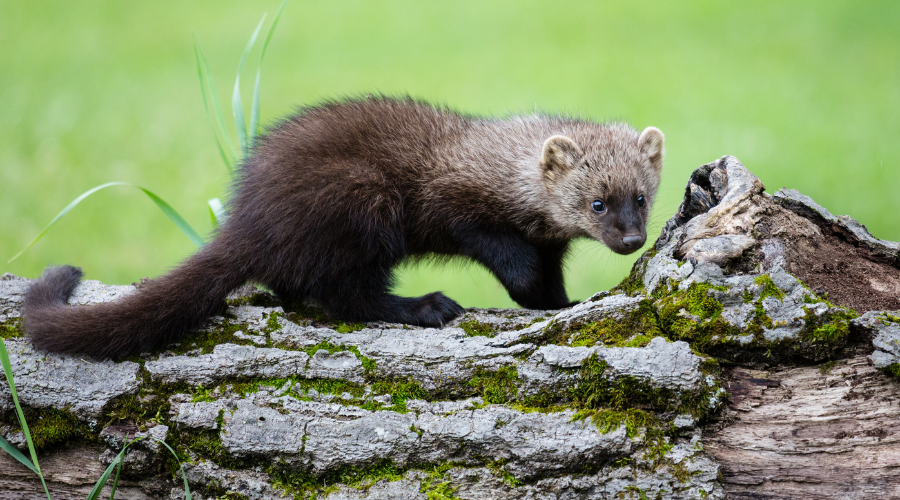
If you have ever seen a Pacific Fisher (Pekania pennanti) in the wild, consider yourself one of the lucky ones. These elusive members of the weasel family den high up in old growth conifers and are mainly crepuscular (most active at dawn and dusk). Standing at about the size of a large house cat, the Fishers’ diet consists mostly of small mammals and birds. One impressive feature of their indiscriminate diet is their ability to hunt and kill porcupines, mostly attacking the face. When not gorging on small furry friends the fisher has been known to supplement their diet with plants, berries, and even fungi (especially false truffles).
Fisher populations took a major hit at the turn of the century with the advent of industrial logging, forest fires, and trapping. Populations today are around 4,000 individuals, with southern Oregon and northern California having the highest density in the US with around 3,200 individuals. Today one of the major threats to populations is rodenticides from illegal cannabis grows. A USFS study in 2013 found that out of all carcasses recovered in the Sierra National Forest, 85% tested positive for rodenticides (Craig et al., 2013).
While the Southern Sierra Nevada population is listed as endangered under the California Endangered Species Act, our Northern California/Southern Oregon population is only considered a “candidate” for listing. The species has been the subject of numerous lawsuits and petitions since 2000. While the OR/CA distinct population segment was proposed for listing in 2014 and again in 2019, these efforts were either withdrawn or overturned by courts, eventually leading to a 2025 "not warranted" finding.
A common missing component from the ecological landscape of the western states is apex predators, including the Pacific Fisher. With shrinking habitats and human pressures the potential for controlling populations of rodents, restoring a balanced forest, and striking awe in the minds of those that wonder is dwindling. Next time you’re wandering around a forest at dusk, remember to look up, let out a Fishers’ chuckle-like grunt, and feel honored to be sharing the same space as our short-snouted friends.
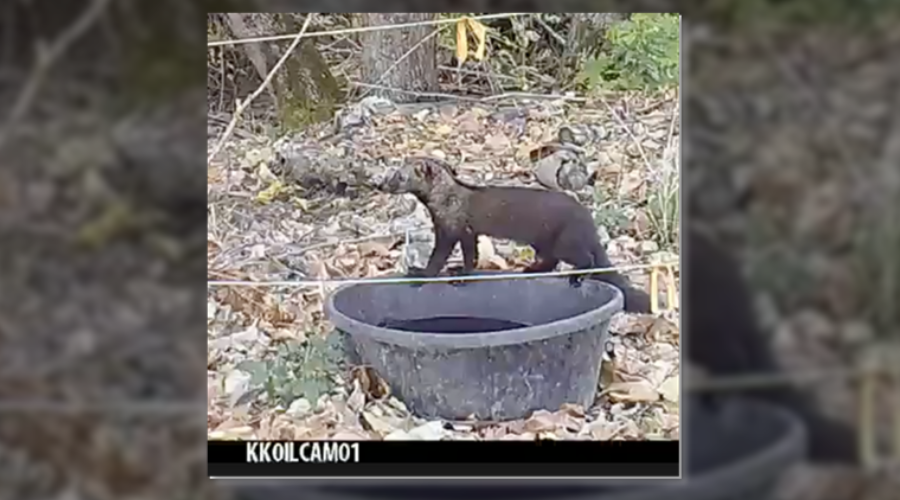
SOLC photo from Clayton Creek Learning Farm trail cam.