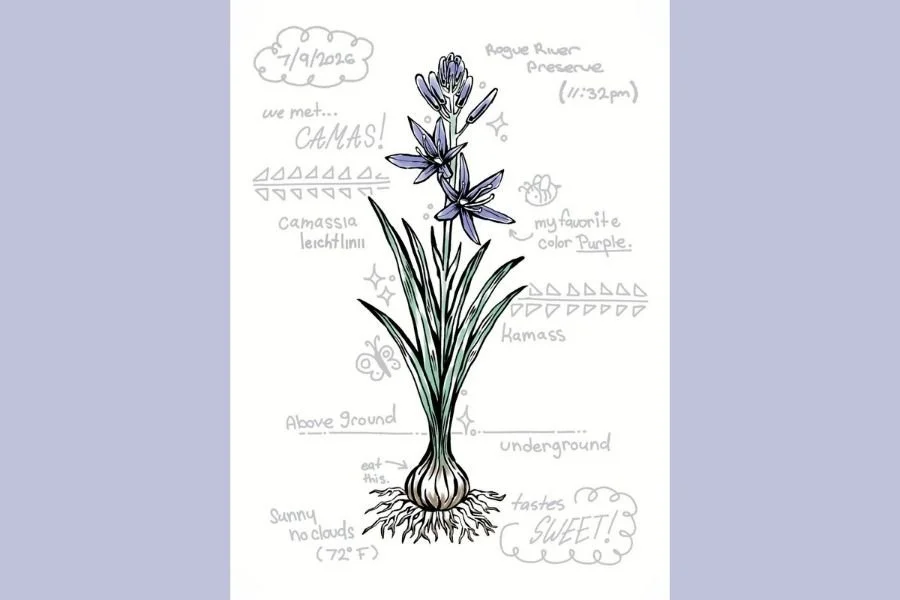
Each spring, patches of blue begin to appear across the meadows at Rogue River Preserve. At first glance, Camas (Camassia leichtlinii) is easy to appreciate simply for its beauty. But these flowers tell a much larger story. One about ecology, culture, and the long relationship between people and this landscape.
The Rogue River Preserve protects 352 acres of oak woodlands, meadows, floodplain forest, and wetlands. Each spring, camas emerges throughout these open landscapes, adding brilliant shades of blue to the preserve, which supports a wide variety of native pollinators.
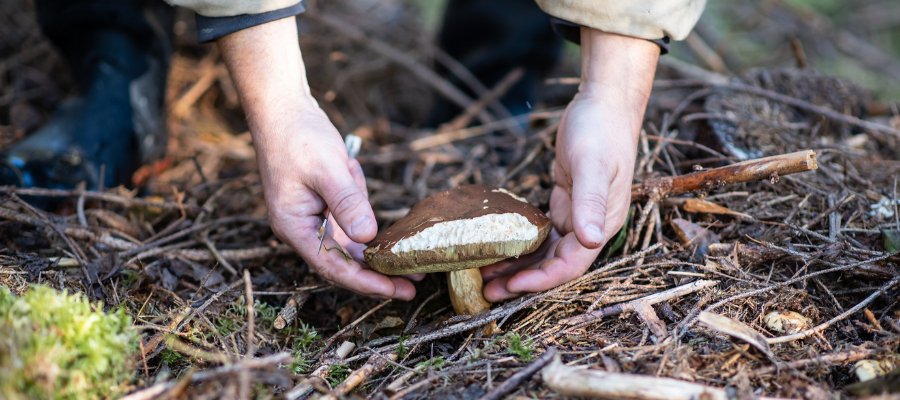
For Indigenous peoples throughout the Pacific Northwest, Camas has always represented much more than a beautiful spring flower. The underground bulbs have nourished communities for thousands of years and remain one of the region's most important First Foods. Harvesting Camas requires patience and care. Traditionally, bulbs are gathered only after the plants have flowered and set seed, allowing future generations of Camas to continue growing. This practice reflects a relationship built on reciprocity—taking only what the land can continue to give.
That relationship is especially meaningful at Rogue River Preserve. The preserve lies within the ancestral homelands of the Takelma and Latgawa peoples, who actively stewarded these landscapes for countless generations through practices such as cultural burning and the careful cultivation of important food plants. Although those relationships were disrupted by colonization and forced removal, descendants of those communities continue to care for these lands today.
Camas taught me to slow down. Beneath the soil, the bulb spends years storing energy before sending up the flowers that catch our attention each spring. The beauty we admire is supported by something we rarely see.
I found myself thinking about how much of our own growth happens the same way. The most meaningful changes often take place quietly, through time spent learning, observing, making mistakes, and building relationships. They aren't always visible in the moment, but eventually they shape the person we become.
Spending time with Camas reminded me that growth doesn't always look dramatic. Sometimes it's rooted in patience, in the unseen work that allows something beautiful to emerge when the season is right.