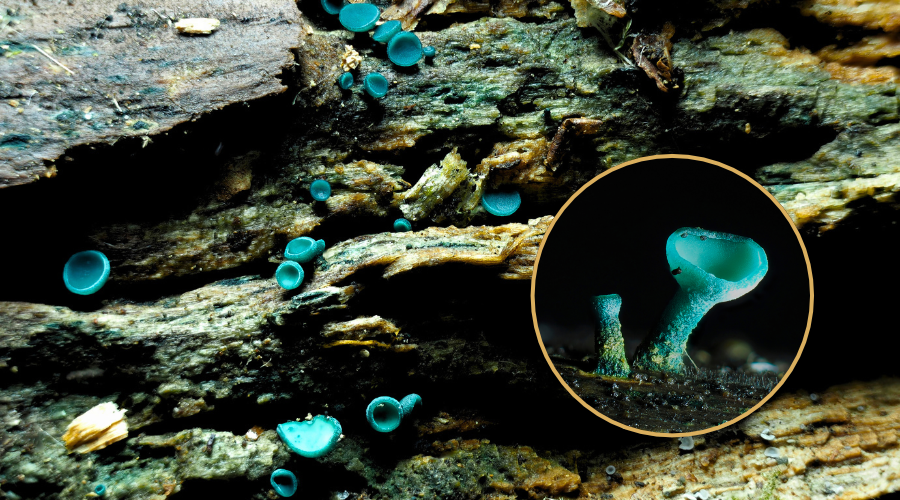
Have you ever walked through a section of forest and noticed greenish-turquoise stained pieces of wood littering the ground? I have and my first thought was “whose paint can exploded?”. Turns out it isn’t graffiti writers but a remarkable fungus aptly named, Green Elfcup (Chlorociboria aeruginascens).
This Saprobic (digests dead organic matter) superhero is mostly observed on chunks of oak or alder in our area. While the small chalice-shaped fruiting body is rarely seen, the astonishing blue-green stain left by the mycelium contains a pigment called Xylindein. This one-of-a-kind pigment produces a color not seen anywhere else in the natural world, a reason why woodworkers for centuries have used the green stained wood for decorative inlays and parquetry.
Another fascinating aspect of this pigment is that it is a natural semiconductor. A team of researchers at Oregon State University have begun experimenting with using this fungus to create flexible conductive networks for use in solar panels and wearable, organic electronics (Lundeberg, 2018). This mushroom is a literal “green” alternative to traditional semiconductors, which historically contain gallium arsenide and other toxic materials.
While it may be true that “the future is fungi”, this remarkable species is presently waiting for you to discover it. Go out and wander through an oak grove or alder patch, keeping an eye to the ground for that electric display of green elven magic.
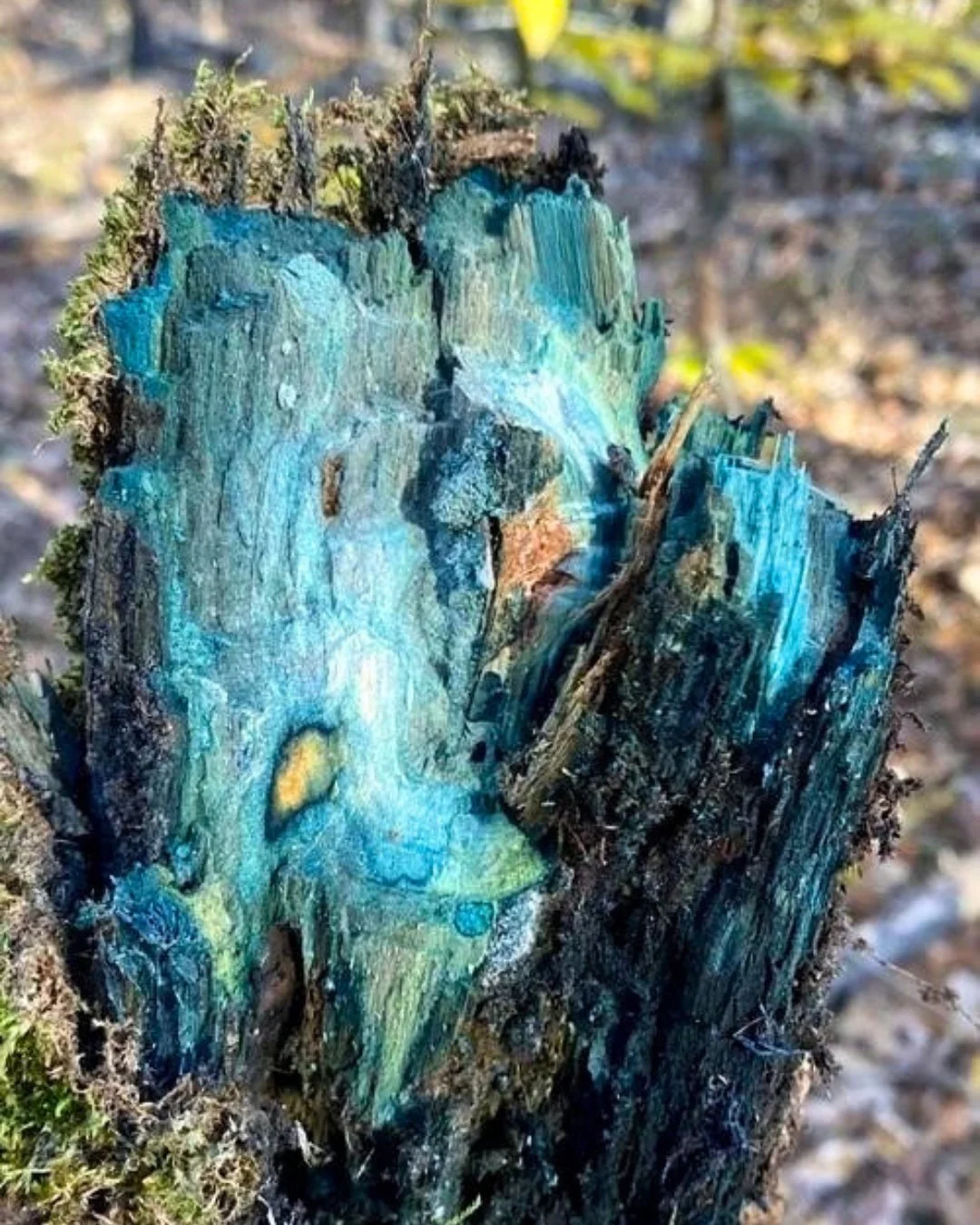
Photo credit: Adam Michael (Mushroom Maurader)